

Causes of Cheek Hollowing After Ultherapy: Why You Shouldn't Just Go with Maximum Intensity
Worried about why cheek hollowing happens with Ultherapy?
"Can cheek hollowing occur after Ultherapy?“
"Isn't the effect better the stronger the treatment?“
During Ultherapy consultations, cheek hollowing is a concern that comes up nearly as often as the lifting effect itself. Not a few patients choose Ultherapy hoping for a strong lifting effect, but worry that it may instead cause their face to look sunken or lead to a loss of volume.
Put simply: cheek hollowing after Ultherapy does not occur simply because the procedure was performed. Skin thickness, tissue depth, and fat distribution differ by area of the face. Therefore, what matters is which area was treated, at what depth, and how much energy was delivered.
[Key Summary: Cheek Hollowing After Ultherapy]
If energy is excessively concentrated in an area lacking volume, cheek hollowing can occur.
The difference between Ultherapy tips is not a difference in intensity, but a difference in treatment depth.
Adjusting intensity by area matters more than always using high energy.
Even with little facial fat, treatment may still be considered depending on the condition of the tissue.
Checking the depth beneath the skin through real-time ultrasound is an important part of the process.
In this post, we will look at the causes of cheek hollowing after Ultherapy, the differences between tips, and the criteria for treating patients with little facial fat.
Causes of Cheek Hollowing After Ultherapy
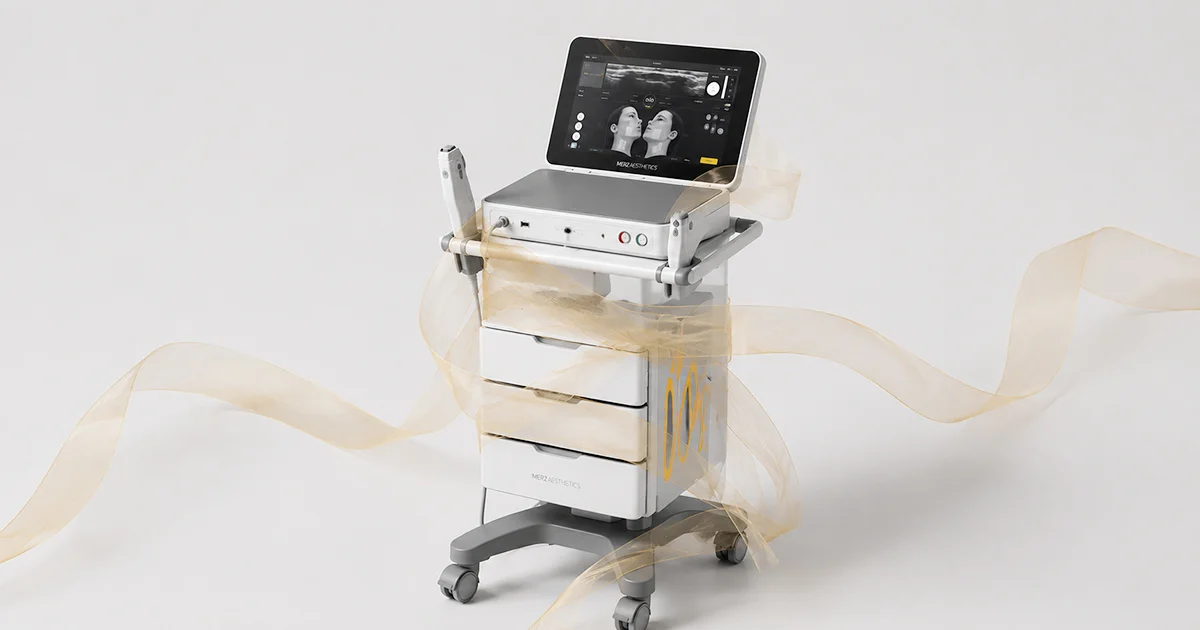
 Ultherapy delivers high-intensity focused ultrasound energy to a targeted depth beneath the skin, creating thermal coagulation points that stimulate collagen renewal and tissue contraction for a lifting effect. But facial tissue structure isn't the same in every area.
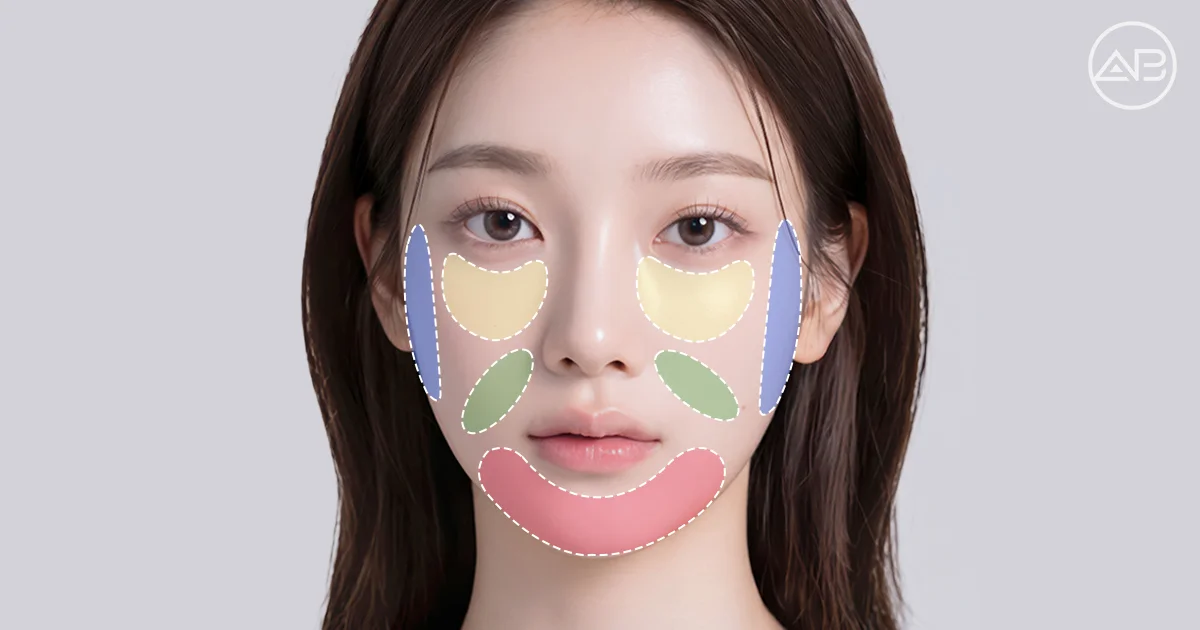
Areas like the buccal fat pad and jowl, where fat and sagging tend to concentrate
Areas like the lateral cheek and cheekbone area, where tissue is thinner or volume is already limited
Areas that differ in skin thickness and fat layer depth
When these differences aren't taken into account and energy is overly concentrated in an area that's already low in volume, fat and volume loss can occur after treatment.
In other words, what matters with cheek hollowing after Ultherapy isn't simply whether the procedure was performed, but which area was treated, and at what depth and energy level.
Comparing Ultherapy Tips: 1.5mm, 3.0mm, and 4.5mm
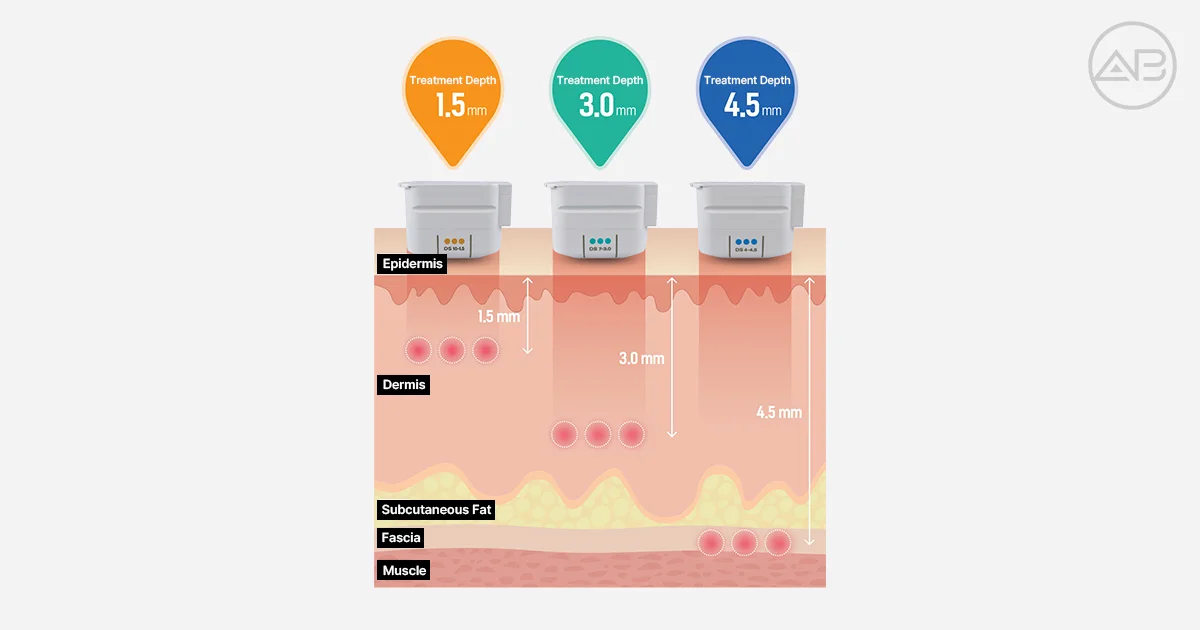
 Ultherapy doesn't deliver energy to just one depth. Depending on the tip used, different depths beneath the skin can be targeted.
1.5mm tip: relatively shallow skin layers
3.0mm tip: deep dermal layer
4.5mm tip: SMAS fascial layer
This means it's hard to say that treating deeper or with more intensity automatically gives better results. Areas with thinner skin and areas where sagging is more pronounced often call for different treatment depths. Ultherapy tips aren't about stronger or weaker energy — they're about targeting a different depth.
Ultimately, what matters isn't using the tip that targets the deepest layer, but choosing the depth that matches the current condition of the skin and underlying tissue.
Is a Stronger Ultherapy Treatment Always Better?
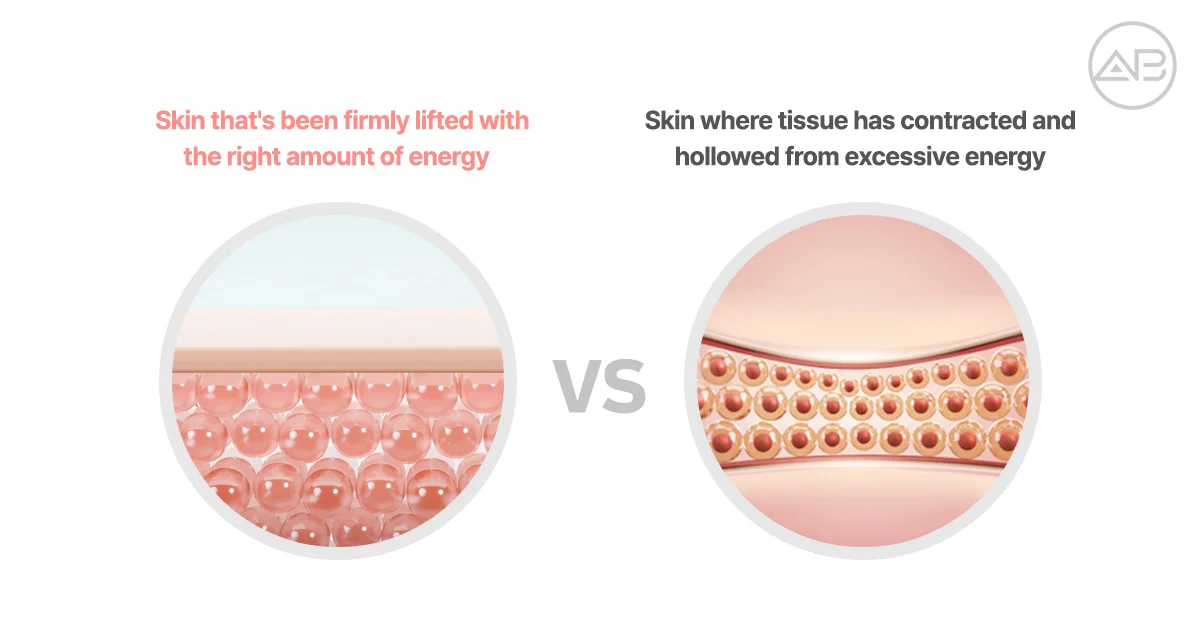 No, it isn't.
[Key Points on Adjusting Ultherapy Energy]
The same energy level doesn't need to be applied across the entire face.
Areas with significant sagging and areas with thinner tissue call for different energy levels.
What matters is delivering the right amount of energy to the target area.
Excessive energy can raise the risk of volume loss or cheek hollowing.
For example, the buccal fat, where fat and sagging tend to build up, and the lateral cheekbone, where tissue is comparatively thin, often call for different treatment goals. Even so, treating both areas at the same intensity can mean one area receives too little energy while the other, which calls for a more delicate approach, receives more than it needs. For this reason, getting the most out of Ultherapy while minimizing the risk of a sunken or hollowed appearance depends on selecting the right tip and energy level for the condition of each individual area of the face.
Why Real-Time Ultrasound Imaging Matters
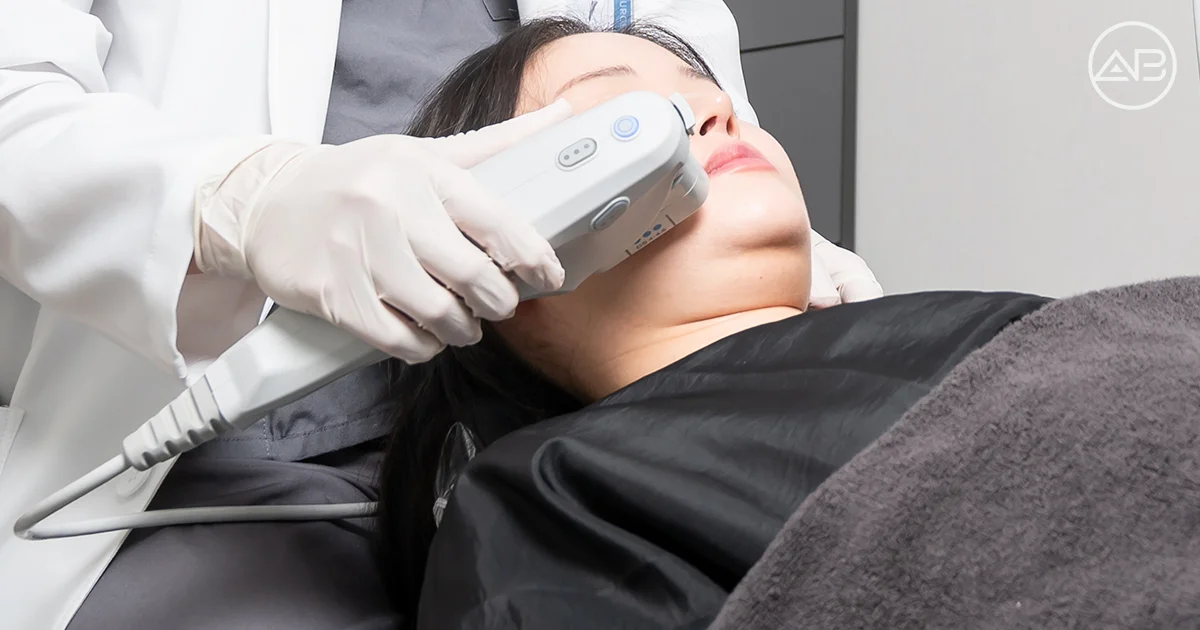
 One of the defining features of Ultherapy is that it lets the medical team visualize tissue beneath the skin in real time during treatment. The ultrasound can image tissue to a depth of up to 8mm, giving a clear view of the target tissue and helping confirm the appropriate treatment depth.
Skin and subcutaneous tissue thickness vary from person to person, and even within the same person's face, tissue depth can differ from one area to the next. For this reason, the ultrasound imaging in Ultherapy isn't just something to look at on a screen — it's one of the key references used to decide where energy should be delivered.
Why Does AB Clinic Emphasize ‘Ultherapy, Zone by Zone’?
 At AB Clinic, we place importance on adjusting energy output and strength by area, taking into account individual skin thickness, fat distribution, degree of sagging, and the specific area being treated, rather than simply applying strong energy across the board. In particular, we distinguish between areas that require volume preservation and areas that need substantial lifting, with the goal of an Ultherapy treatment that keeps the whole face in balance.
In other words, AB Clinic's "Ultherapy, Zone by Zone" isn't simply about using less energy overall.
Enough where it's needed, and a lighter touch where precision matters. Tailoring Ultherapy's output to reflect these differences across the face is central to preventing outcomes like an uneven or hollowed appearance.
Ultherapy FAQ
 Q. What's the difference between the 3.0mm and 4.5mm Ultherapy tips?
The 3.0mm tip targets the deep dermal layer, while the 4.5mm tip targets the SMAS (fascial) layer. A tip that targets a deeper layer isn't automatically more effective — the right choice of tip depends on the condition of the skin and underlying tissue.
Q. Why does cheek hollowing happen after Ultherapy?
Skin and subcutaneous tissue vary in thickness and distribution across different areas of the face. If tissue condition isn't taken into account and energy is overly concentrated in one area, volume loss or a sunken appearance can follow.
Q. Does treatment at a higher level always give better results?
Not necessarily. Rather than applying the same high level across the entire face, it's important to fine-tune the output by area, based on each area's skin condition and degree of sagging.
Q. Can someone with little facial fat still get Ultherapy?
Anyone with less facial fat, or who already has some hollowing, needs a more carefully tailored treatment plan. By adjusting the output differently across areas, Ultherapy can still be performed even in areas with minimal fat.
- Written by
- AB Medical Editorial Team
- Medically reviewed by
- Bo-Hyun Kwon (DERMATOLOGIST)
- Updated on
- 2026.11.13

This article is for informational purposes only and does not replace a personal medical consultation.
For more details, we recommend visiting AB Clinic and consulting with our dedicated dermatology specialists. For inquiries about treatment costs and other procedures, please check the link below and leave a consultation request. We'll get back to you as soon as possible.