
Complete Guide to Thermage Lifting: From How It Works and Its Benefits to Treatment Intervals and Ideal Candidates
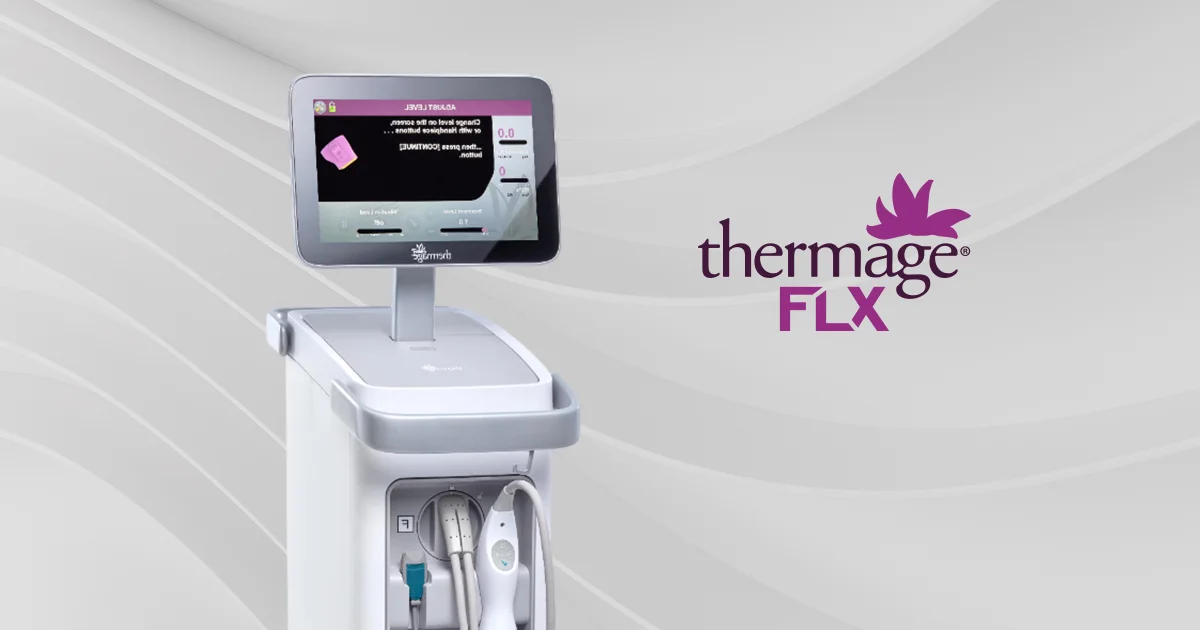
When skin sagging starts to become noticeable, the first solution that often comes to mind is undoubtedly “laser lifting”. Because it delivers visible results quickly through a non-invasive approach, many people begin researching various lifting procedures. Among them, “Thermage” has long been recognized as a proven radiofrequency lifting treatment, particularly popular among individuals with thinner skin for its high satisfaction rates.
Thermage is widely used as a non-surgical lifting procedure that stimulates collagen regeneration using radiofrequency energy. However, it does not guarantee the same effect for every skin type. Depending on each person’s unique skin physiology—such as skin thickness, the density of elastic fibers, and subcutaneous fat distribution—the response can vary. For this reason, some individuals may not feel the expected results. Therefore, it is important to select the right lifting device that suits your skin condition before treatment.
In this article, we will take a closer look at the expected benefits of Thermage, its treatment characteristics and intervals, and who is best suited for this procedure.
What is Thermage?
Thermage is a lifting procedure that delivers radiofrequency (RF) energy to the skin in the form of electrical currents, generating heat that stimulates the skin’s deeper layers. From the surface down to the dermis, collagen regeneration gradually occurs over 1 to 3 months, progressively enhancing the lifting effect. Since it does not damage the skin’s surface, recovery time is short, making it well-suited for those who want a natural improvement in skin firmness.
Thermage Treatment Effects
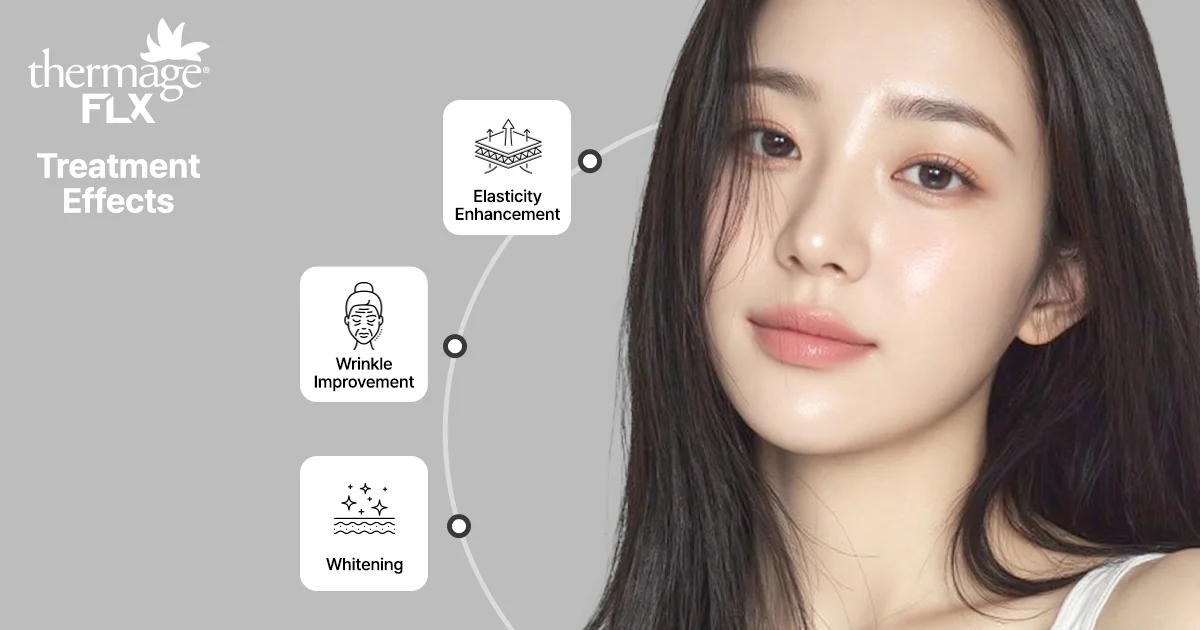 Thermage improves overall skin firmness by tightening sagging areas and progressively stimulating collagen and elastin regeneration in the deeper layers over time, leading to noticeably firmer skin. It is especially effective at increasing skin density in areas prone to fine lines, such as around the eyes and mouth, helping to smooth and reduce delicate wrinkles. The treatment also refines skin texture for a smoother appearance. Additionally, as blood circulation and metabolism are promoted in the treated areas, dull skin tone gradually brightens, resulting in a clearer, more radiant complexion. For these reasons, Thermage is an ideal procedure for those who wish to address multiple concerns at once—including lifting, elasticity, wrinkles, pores, skin texture, and skin tone.
Why Thermage is suitable for thin skin?
1. Precise Adjustment
Thermage allows fine-tuning of the treatment tip type and energy output according to the skin’s condition. This means radiofrequency energy can be delivered accurately and safely without excessive stimulation, even on thin or sensitive areas, minimizing the risk of skin damage.
2. Volume Preservation
Some ultrasound-based lifting treatments can cause volume loss or hollowing due to the intensity of concentrated ultrasound energy. In contrast, Thermage distributes thermal energy broadly and evenly across the skin layers, making it safer to use in areas with thinner fat tissue.
3. Low Irritation
Thermage stimulates the dermis and subcutaneous layers while passing through the epidermis without causing damage. As a result, it is a non-invasive lifting device that can be used relatively comfortably even for patients with sensitive or breakout-prone skin. Because it does not irritate the skin’s surface, recovery is quick, and patients can easily return to daily activities after treatment.
Thermage Treatment Intervals
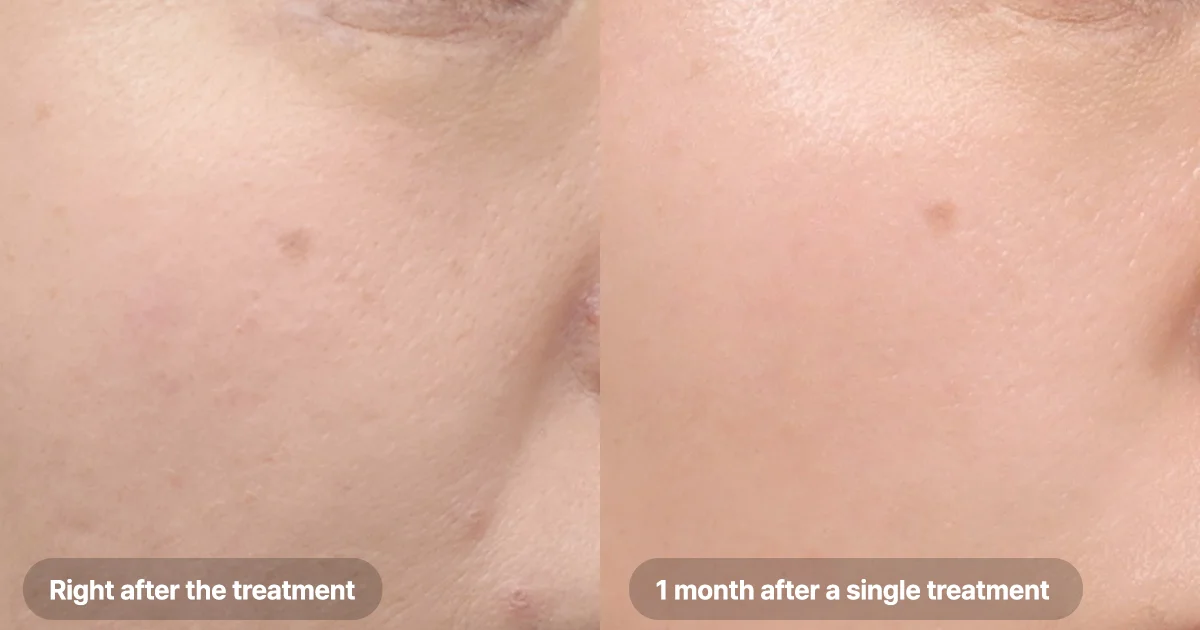 Thermage is a non-surgical lifting treatment that can deliver immediate improvements in skin elasticity and stimulate collagen regeneration with just one session. However, since skin aging continues over time, maintaining the lifting results with regular treatments is important.
In general, the effects of Thermage gradually intensify from right after the procedure up to about 2–3 months, and then typically last for approximately 6 months to 1 year. For this reason, it is recommended to have maintenance treatments once a year or at intervals of 6 months to 1 year. However, because the duration of the lifting effect can vary depending on factors such as skin condition, age, lifestyle habits, and previous treatment history, it is safest and most effective to set a personalized treatment schedule based on a precise skin evaluation and consultation beforehand.
Which lifting treatment is the best for me?
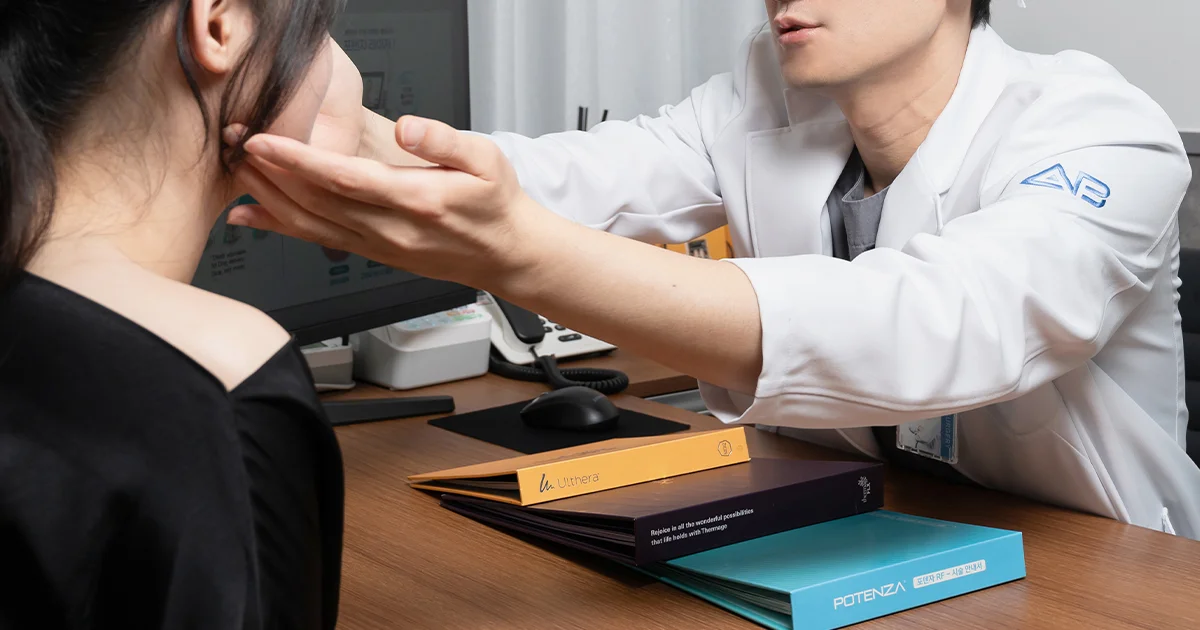 Lifting treatments require different approaches depending on skin type and tissue structure. For example, if your skin is thin, sensitive, or primarily experiencing elasticity loss in the epidermal layer, radiofrequency-based lifting is generally more suitable. In contrast, if your skin is thicker and the loss of elasticity has progressed down to the SMAS (superficial musculoaponeurotic system) layer, ultrasound-based lifting may be more effective.
However, these guidelines cannot be determined solely by factors such as skin thickness or age. Since each person’s skin condition and the way aging progresses are unique, the most important step is to develop a personalized lifting plan through a one-on-one consultation with an experienced medical professional.
At AB Clinic, our team of laser lifting specialists personally oversee every stage of care, from precise diagnosis to treatment. We offer detailed, customized lifting solutions that consider each patient’s skin structure and aging characteristics. Rather than taking a one-size-fits-all approach, we pursue natural, high-satisfaction results through a medical process built on years of experience and data.
- Written by
- AB Medical Editorial Team
- Medically reviewed by
- Min-Hyung Seo (DERMATOLOGIST)
- Updated on
- 2026.11.13

This article is for informational purposes only and does not replace a personal medical consultation.
For more details, we recommend visiting AB Clinic and consulting with our dedicated dermatology specialists. For inquiries about treatment costs and other procedures, please check the link below and leave a consultation request. We'll get back to you as soon as possible.