

Facial Types with Limited Effectiveness of Ultherapy and Its Potential Side Effects
Among non-surgical lifting devices, Ultherapy is one of the most widely used treatments. It is favored for its short recovery period and its ability to deliver natural-looking results. However, there are also consistent reports of cases in which Ultherapy results were less noticeable than expected, as well as cases where side effects occurred after treatment. These outcomes are most often related to individual facial contour, skin condition, and the precision of treatment planning.
In this column, we provide a professional overview of facial characteristics associated with limited Ultherapy effectiveness, commonly observed side effects, and the essential conditions required to achieve long-lasting lifting results.
Principles and Expected Effects of Ultherapy
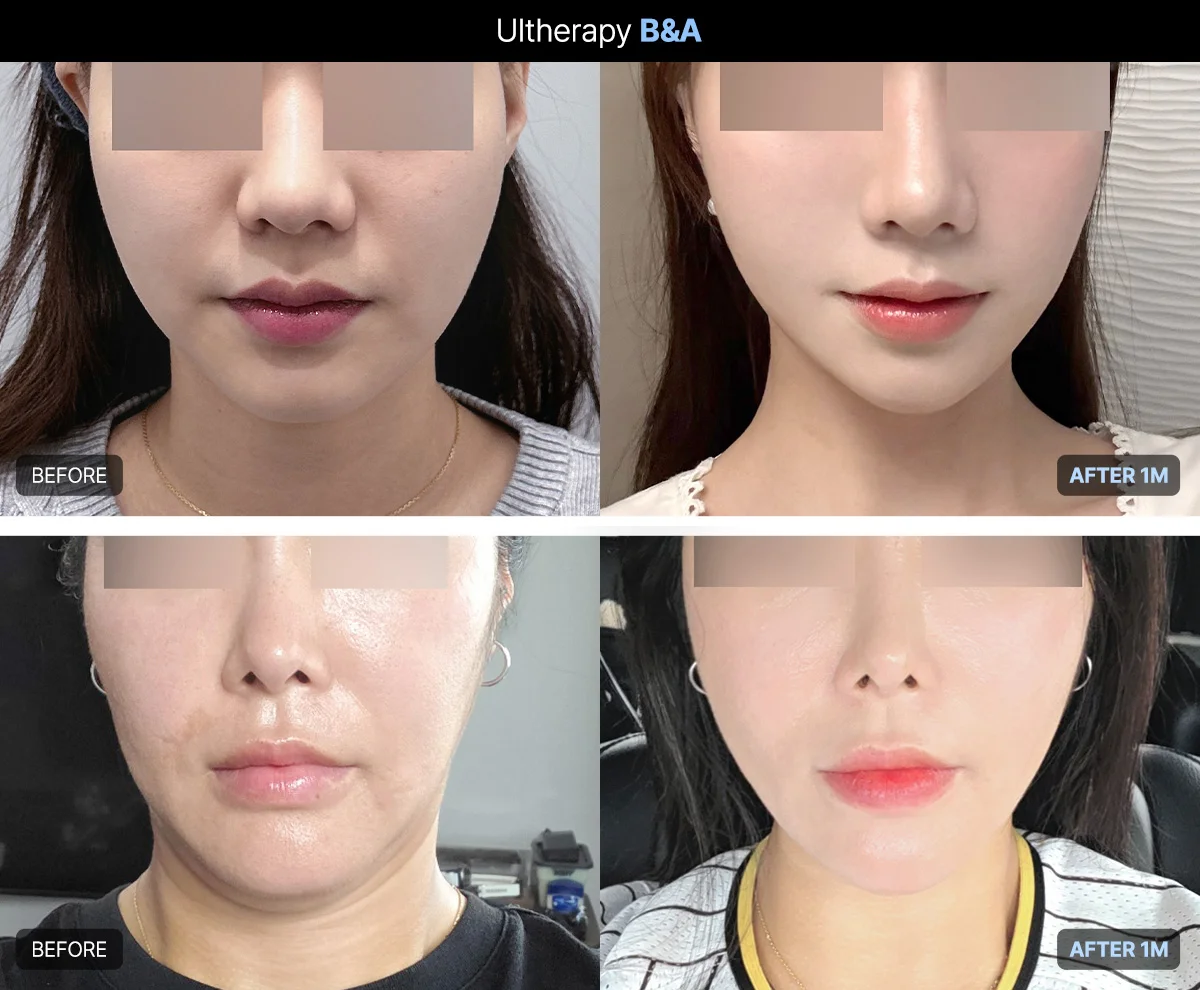 Ultherapy delivers high-intensity focused ultrasound (HIFU) to the SMAS layer, generating precise thermal coagulation points. This process stimulates collagen regeneration and induces tissue contraction, resulting in a lifting effect. Because the success of Ultherapy depends heavily on accurate calibration of treatment depth, energy level, and shot distribution, the use of authentic equipment and a thorough analysis of the patient’s anatomical structure prior to treatment are essential.
Primary effects of Ultherapy include:
Natural jawline contouring
Mid-face and nasolabial fold lifting
Improved skin elasticity
Facial contour refinement and tightening
Reasons Why Ultherapy May Be Less Effective
Insufficient shot count or shot distribution not tailored to facial structure
One of the most common reasons for reduced Ultherapy effectiveness is an inadequate number of shots or improper shot distribution. If sufficient energy is not delivered to the target areas, if excessive shots are applied to areas with thin skin, or if layer-specific depth planning is not properly performed, the lifting effect may be minimal. Simply increasing the number of shots does not enhance results; rather, precise, layer-specific shot distribution tailored to the individual’s facial structure is key.
Incompatibility with skin thickness and fat layer distribution
Facial types with thin skin, minimal cheek fat, or reduced soft tissue following facial contouring surgery may experience weaker heat transfer, resulting in diminished Ultherapy effectiveness. Conversely, faces with heavy and sagging fat may also have limitations when treated with device-based lifting alone.
Use of non-genuine or reused tips
When non-genuine or reused tips are used, inaccuracies in energy output may occur. This not only reduces treatment effectiveness but also increases the risk of Ultherapy-related side effects, such as thermal injury or cheek hollowing.
Facial Characteristics with Reduced Ultherapy Effectiveness
Faces with low volume and insufficient fat
In these cases, heat energy is not evenly distributed, leading to minimal lifting effects and a higher risk of cheek hollowing.
Faces with moderate to severe sagging
When skin laxity is moderate or more advanced, device-based lifting alone is often insufficient to achieve satisfactory results.
Faces with thick and wide submental fat pads
Due to the thickness of the fat layer, energy delivery efficiency may be reduced. In such cases, combining Ultherapy with fat-dissolving injections, such as contour injections, may help achieve more refined outcomes.
Reasons Why Ultherapy Results May Not Last Long
Ultherapy results typically last between six months and one year, but the duration varies significantly depending on individual skin regeneration capacity, aging rate, fat layer structure, lifestyle habits, and the precision of treatment planning.
In individuals with low collagen responsiveness or faces with heavy, sagging fat layers, results may fade more quickly. Lifestyle factors such as smoking, alcohol consumption, and lack of sleep can also shorten treatment longevity. To improve and maintain results, customized treatment planning based on facial structure and lifestyle, combined with precise lifting strategies, is essential.
Potential Adverse Effects of Ultherapy
Although Ultherapy is considered a relatively safe, non-invasive lifting procedure, unexpected side effects may occur if treatment planning is imprecise or if the patient’s unique skin and fat tissue structure is not adequately considered. Because Ultherapy delivers energy directly into the deeper layers of the skin, incorrect determination of treatment depth, shot count, or directional placement may result in excessive or insufficient tissue response.
Commonly observed Ultherapy side effects in clinical practice include:
Temporary tingling or numbness caused by nerve stimulation
Cheek hollowing due to fat loss
Redness or hyperpigmentation
Asymmetrical lifting
How to Find the Right Lifting Treatment for You: The Core of Ultherapy Is “Precised Design”
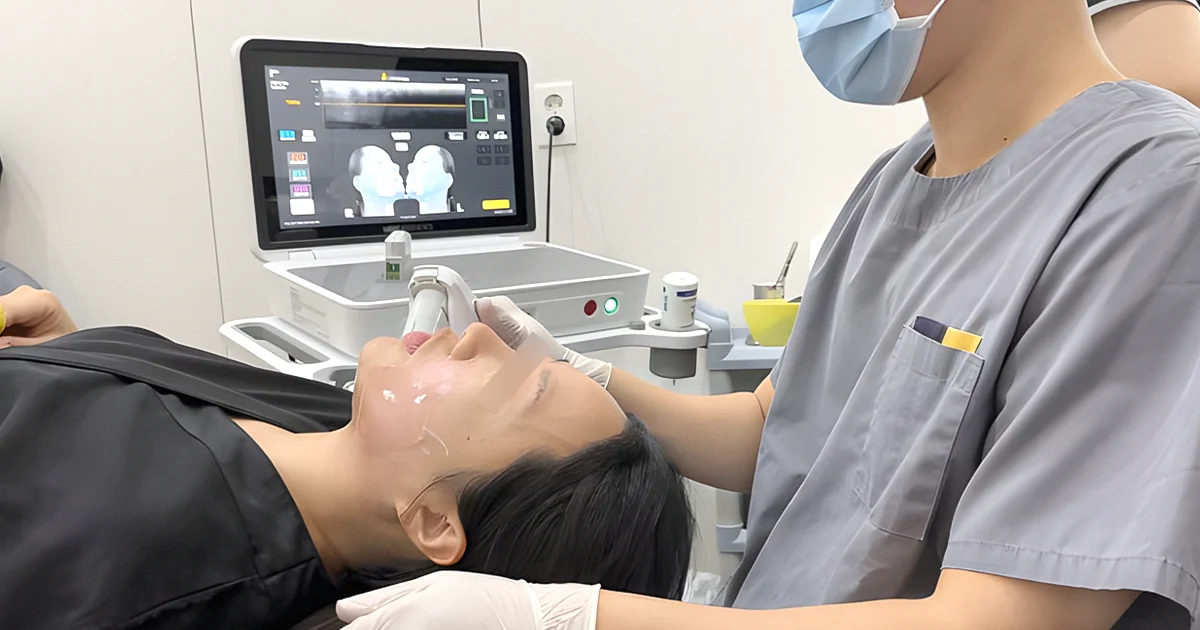 Ultherapy is not merely a device-based procedure but a lifting technique that requires precise treatment planning based on comprehensive anatomical analysis. To maximize results, it is essential to evaluate fat layer thickness, SMAS depth, skin responsiveness, muscle movement patterns, bone structure, and the stage of aging. Based on this analysis, customized shot counts, depths, and directions must be designed for each treatment area.
Why AB Clinic Delivers Stable and Consistent Ultherapy Results
 At AB Clinic, we recognize that Ultherapy outcomes vary significantly depending on facial structure and the accuracy of treatment planning. For this reason, we perform high-precision assessments of the SMAS layer, fat layers, and skin thickness prior to treatment using an advanced analysis system. Shot count and energy levels are then customized according to each individual’s skin responsiveness, using only 100% genuine Ultherapy tips.
Our dedicated dermatology team designs lifting directions based on each patient’s facial structure, and when necessary, combines Ultherapy with complementary treatments such as HIFU, radiofrequency therapy, thread lifting, or fat pad correction to achieve natural and well-balanced results.
While Ultherapy is a powerful device, it is not a one-size-fits-all solution. Its success depends entirely on sophisticated treatment design that considers each patient’s unique skin condition and anatomical characteristics. At AB Clinic, our goal is to deliver optimized lifting outcomes that go beyond the mechanical effects of the device itself.
Currently, AB Clinic offers a 1:1 personalized Ultherapy experience at a reasonable price, allowing patients to undergo customized treatment tailored to their individual needs.
- Written by
- AB Medical Editorial Team
- Medically reviewed by
- Min-Hyung Seo (DERMATOLOGIST)
- Updated on
- 2026.11.13

This article is for informational purposes only and does not replace a personal medical consultation.
For more details, we recommend visiting AB Clinic and consulting with our dedicated dermatology specialists. For inquiries about treatment costs and other procedures, please check the link below and leave a consultation request. We'll get back to you as soon as possible.